What is Fiber Optic?
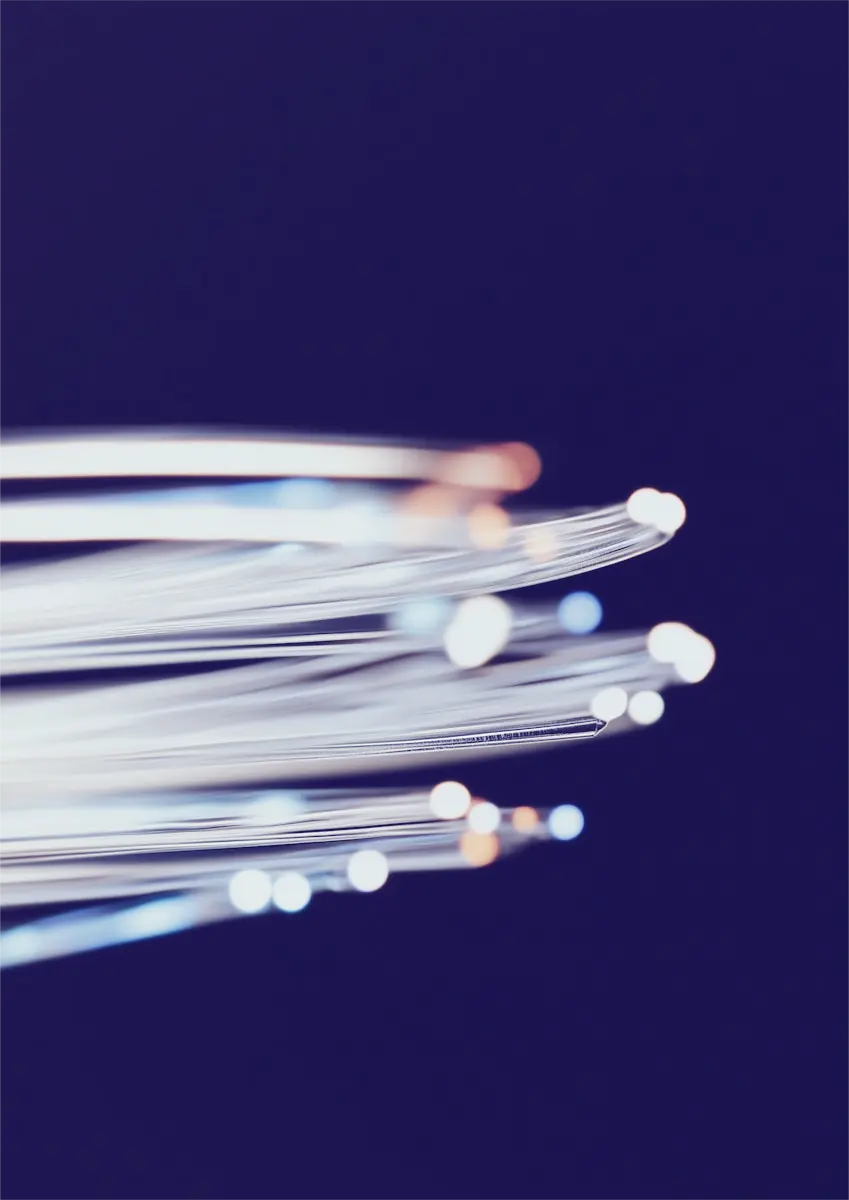
Discover the essentials of Fiber Optic technology and IPv6. Learn how high-speed light signals and the new 128-bit addressing protocol work together to build the next generation of global internet connectivity.
While IPv6 provides the "mailing addresses" for the digital world, Fiber Optic technology provides the "superhighways" that carry the data.
Fiber optic technology uses thin strands of glass or plastic to transmit data as pulses of light. Unlike traditional copper wires, which send electrical signals, fiber optics can carry vast amounts of information over incredibly long distances at nearly the speed of light.
How It Works
At the heart of a fiber optic cable is the core, a glass strand so pure that you could see through a window of it miles thick.
Conversion: A transmitter converts electrical data into light signals using a laser or LED.
Total Internal Reflection: The light bounces off the walls of the glass core in a zigzag pattern. Because the surrounding layer, called the cladding, acts like a mirror, no light escapes, ensuring the signal remains strong.
Reception: At the other end, an optical receiver converts those light pulses back into electrical signals that your computer or router can understand.
Why Fiber Optic is Superior
Fiber is the gold standard for internet connectivity for several key reasons:
Incredible Bandwidth: Fiber can carry significantly more data than copper, supporting the high-definition streaming and massive file transfers we use today.
Immunity to Interference: Because it uses light instead of electricity, fiber isn't affected by electromagnetic interference from power lines or lightning.
Low Latency: Data moves faster through fiber, which is critical for real-time applications like online gaming and financial trading.
IPv6: The Future of Internet Addressing
As fiber optic cables connect more of the world, we need a way to identify every single device on these high-speed lines. This is where Internet Protocol version 6 (IPv6) becomes essential.
The End of IPv4 Scarcity
The previous system, IPv4, only allowed for about 4.3 billion addresses. Since there are more devices today than people, we have officially run out of those old addresses. IPv6 uses a 128-bit format, creating an astronomical number of addresses—340 undecillion, to be exact. This ensures that every smart device, from your watch to your car, can have its own unique identity.
Enhanced Security and Speed
IPv6 was built to be faster and safer than the older system. It includes mandatory encryption (IPsec) to protect your data as it travels. Furthermore, it simplifies how routers handle data packets. When combined with the raw speed of fiber optic cables, IPv6 allows for a much more efficient and "lag-free" internet experience.
The Perfect Partnership
Fiber optics and IPv6 are the two pillars of the modern internet. Fiber provides the physical speed, while IPv6 provides the logical space. Together, they enable the Internet of Things (IoT), 5G mobile networks, and the future of global communication.