The Backbone of the Internet: Understanding IPv4
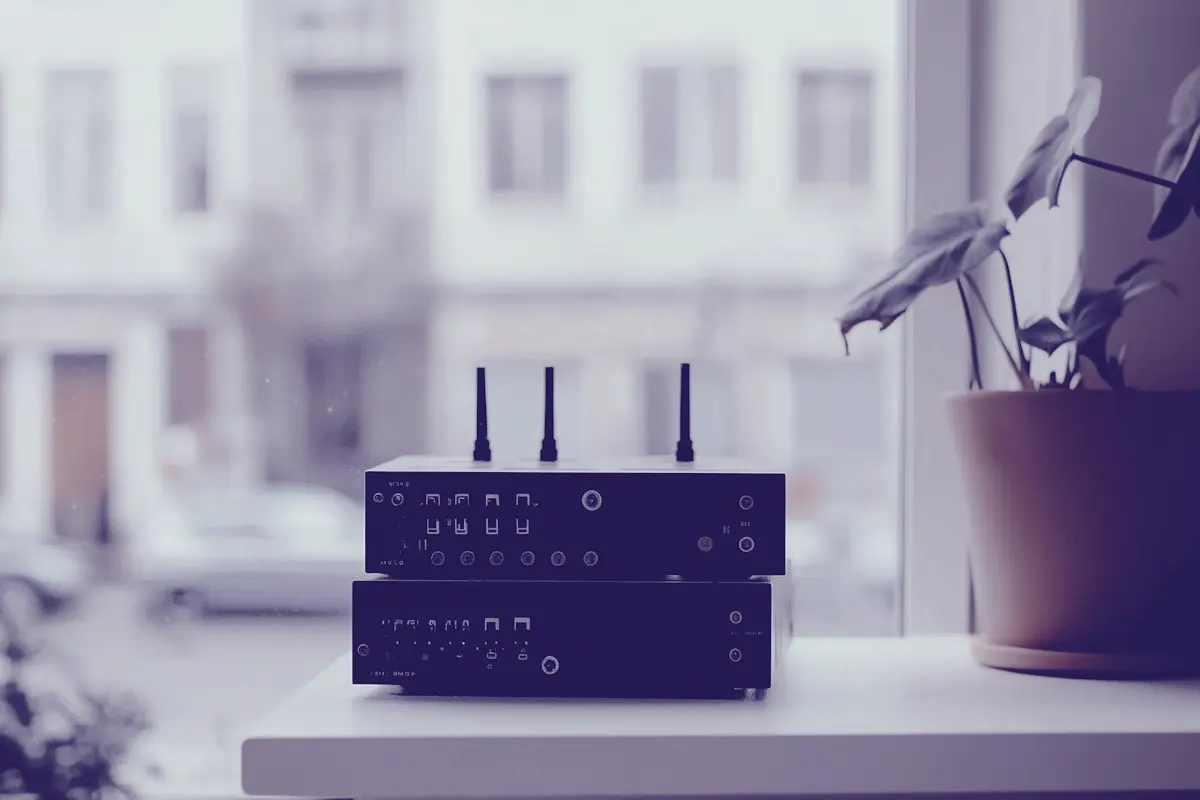
v4 (Internet Protocol version 4) is the universal addressing system used to identify and connect devices across the internet. It works like a digital postal service, assigning each device a unique numerical label—such as 172.217.14.206—to ensure that data packets sent from one computer reach the correct destination. While it has been the backbone of global communication since the 1980s, its 32-bit structure provides only about 4.3 billion addresses, a limit the world has already reached, leading to the gradual adoption of the much larger IPv6.
Imagine trying to send a letter to a friend, but houses have no numbers and streets have no names. The postal service would collapse.
The internet works on a very similar principle. Every piece of information sent online—whether it’s an email, a Netflix movie, or a search query—needs a specific destination and a return address. In the digital world, these addresses are defined by the Internet Protocol (IP).1
For nearly four decades, one version of this protocol has done the heavy lifting, connecting billions of devices worldwide: IPv4.
Here is a breakdown of what IPv4 is, how it works, and why it remains crucial even as we outgrow it.
What is IPv4?
IPv4 stands for Internet Protocol version 4.2
It is the fourth revision of the Internet Protocol used to identify devices on a network through an addressing system.3 It is the underlying technology that makes the modern internet possible.
Think of an IPv4 address as a "digital phone number" or a "postal code" for your computer, smartphone, server, or smart printer. Without this unique identifier, other devices wouldn't know how to find yours on the vast expanse of the internet to send it data.
How Does an IPv4 Address Look?
Even if you aren't "tech-savvy," you have almost certainly seen an IPv4 address before. They look like this:
192.168.1.1
or
172.217.14.206 (one of Google's addresses)4
The Technical Structure
Under the hood, IPv4 uses a 32-bit address scheme.5 This means the address is actually made up of 32 ones and zeros in binary code.
Because humans are terrible at reading 32-digit binary numbers, we convert them into "dotted-decimal notation" to make them readable.
An IPv4 address is broken into four sections, separated by dots.6 Each section is called an "octet" (because it represents 8 bits).7 Each of these four numbers can range from 0 to 255.
How It Works: The Digital Delivery Service
When you type a website address like "www.example.com" into your browser, your computer doesn't actually know where that website lives.
DNS Lookup: Your computer asks a Domain Name System (DNS) server to translate the human-readable name (www.example.com) into a machine-readable IP address (e.g., 93.184.216.34).
Data Packets: When you request information from that site, your request is broken down into small digital envelopes called "packets."8
Labeling: Each packet is stamped with two vital pieces of information:
The Destination IP Address (where it's going).9
The Source IP Address (your IP, so they know where to send the reply).10
Routing: Routers across the internet act like automated postal sorting machines. Read the destination IP on the packet and forward it toward the correct network until it reaches the target server.
The Great IPv4 Crisis: Running Out of Numbers
IPv4 was deployed in the early 1980s. At the time, the internet was largely an academic and military experiment.11 The designers had to decide how many addresses the system could handle.
With its 32-bit structure, IPv4 allows for a maximum of approximately 4.3 billion unique addresses (12$2^{32}$).13
In 1983, 4.3 billion seemed like an infinite amount. They couldn't have predicted a world with 8 billion people, where most individuals own multiple devices (phones, laptops, watches) and even refrigerators and lightbulbs need internet connections.
The "Exhaustion"
Officially, the central pool of new IPv4 addresses "ran out" in the 2010s. Today, getting a block of new IPv4 addresses is very difficult and expensive.14
How Are We Still Using It? (The Workarounds)
If we ran out of addresses years ago, why does the internet still work? The answer lies in clever engineering tricks, primarily Network Address Translation (NAT).
NAT allows a single public IPv4 address to represent an entire household or office building.15
Think of an office building with one main telephone number and a receptionist. When you call the main number, the receptionist connects you to extension 101, 102, or 103.
NAT works similarly. Your home router has one "real" (public) IPv4 address assigned by your Internet Service Provider. All your devices inside your house use "private" addresses (usually starting with 192.168...). The router acts as the receptionist, juggling traffic between the one public address outside and the many private addresses inside.16
The Future: IPv6
While NAT extended the life of IPv4, it is not a permanent solution. The ultimate solution is the successor protocol: IPv6.
IPv4 is a 32-bit system.17 IPv6 is a 128-bit system.18
While IPv4 offers 4.3 billion addresses, IPv6 offers approximately 340 undecillion addresses. That is a number followed by 36 zeros. It is enough to assign an IP address to every atom on the surface of the Earth and still have plenty left over.
Conclusion
IPv4 is the foundational technology of the internet age. It is a robust, reliable workhorse that has far exceeded its original design lifespan. While the world is slowly migrating toward the vastly larger IPv6, IPv4 remains the dominant language of the internet today, kept alive by necessity and clever engineering.